When I was twenty-one, I flew to Baghdad, Iraq for my first deployment. It was my first trans-Atlantic trip. Before that, most of my traveling had been limited to a handful of states up and down the East coast. As I grew up, I learned that there was a big, wide world beyond what I was seeing, full of wonder, but I didn’t understand just how big. And even though every state I visited had its own way of living, there was still a sense of being in the same country that connected some familiarity everywhere I went. It wasn’t until I stared out into a foreign city, on a moonlit rooftop, that I understood how little I grasped of the world around me.
That culminating experience began with a 15-hour flight to Kuwait, on which I got to spend a lot of timing thinking about what was to come. Everything that I knew about my end destination had come from countless PowerPoint presentations, and the pictures within them. What little, real-world impressions I had of the environment I was about to be came during the combat training I did at a base in the Mojave Desert; the mockup cities and sand that got everywhere matched the photos I had seen in every news report for years. Still, there was only so much that the Army and CNN could do to prepare me for stepping off a plane onto foreign soil. As I was disembarking, I was hit with a gust of warm, dry wind and stopped in temporary disbelief—I was no longer in my own country. I wasn’t afforded the luxury of time to go sightseeing, and the jetlag quickly reminded me that I crossed the Atlantic Ocean in mere hours; I was exhausted. I didn’t quite appreciate yet the true measure of the journey I had made.
A couple of days later, we were back on another plane heading for Iraq. We landed at Baghdad International Airport, otherwise known as BIAP, and worked our way to the next stop on our trip. We ended up at a holdover point for units in transition and played the waiting game. At this point, I was getting used to the environment. Everything had a sense of semi-permanency, being a mixture of tents, metal buildings, and shipping containers. Tan was the only color to be seen, and that was due to all the sand. Aside from that, nothing I was seeing seemed out of the ordinary from what I had been experiencing in the states—even the chow hall was set up like a giant Golden Corral. A giant, metal building opened into a brightly lit dining facility that fit into the space of an airplane hangar. There were buffet lines all over the place, and the food was some of the best I had ever seen: fried chicken, mashed potatoes, and mac ‘n cheese overloaded my plate. The place even had a movie theater!
It hadn’t quite hit me that I was in another world because everything around me was still very much American. I was on a US facility, eating American food surrounded by my brothers and sisters-in-arms. I knew I wasn’t in Kansas anymore when I had landed, but up to this point my unit and I had yet to “leave the wire,” as it was called. We hadn’t even gotten to the frontline. The safety net was about to be pulled back, however. Under the cover of night, we boarded Chinooks with our rucksacks and flew to our brigade’s own forward operating base (FOB).
We landed on a helipad surrounded by tan, square buildings that better fit the architecture of pictures I had seen of the city. We jumped off the choppers with a thousand moving pieces happening at once; gear had to be unloaded and heads counted, all while the helicopters roared next to us. When everything and everyone was accounted for, the pilots were given the thumbs up and took off. We all watched as a single rucksack flew, from the backwash of the rotors, into a giant puddle of standing water. As my platoon sergeant waded into the middle to fish it out, we all thought the same thing: it sucked for whoever owned that bag. There was no better way to welcome me to the suck than discover it was mine; it took me months to feel like I had cleaned off all the grime.
Our new home was completely different from our previous stops. Although it had the signature “tent city” that every post we had been to had, the rest of these buildings were permanent structures. We were given rooms in a two-story dormitory in the middle of the base and told to relax for the night. Keeping in tradition with the rest of our journey, the first thing many of us did after unloading our gear (mine went straight into the shower) was seek out the chow hall. Having gotten a sandwich that gave good evidence that I wouldn’t be starving over the next eleven months, I went back to the building I was housed in and began exploring.
We had arrived at a late hour to this base; the world around us was quiet. Time never stops for the military, however. Soldiers were still up and about; vehicles rolled through the FOB to and from missions. I discovered that the building we were staying in had rooftop access and made my way up to get a better look at the world around me. The first thing I saw when I looked out from over that roof was aliens.
At least, that’s what my brain was trying to tell my eyes. I had never seen something like this before, and I was baffled at being unable to translate it. There, below me, was a vehicle rolling through a street alley with bright lights shining all around its frame. It lit up the world as it rolled though, and it looked like a mix between McLeach’s halftrack in the Rescuers Down Under, and a UFO. It was a week before I realized I had seen an MRAP (Multi-Resistant Ambush Protected) specifically designed for route clearance. That sight paled in comparison to looking out over the walls of the base from where I stood and seeing Baghdad at night, though. I was in Iraq. All technology had gone out the door, for I was the young explorer I had read about in every history lesson as I was growing up who had gone into a strange land in the name of love, war, or curiosity. For a moment I put down my mission and admired the world I was in; the war would exist tomorrow, but for now, there was simply the strangeness of a foreign wind on my face that carried unfamiliar smells to me: a freshness of the open air mixed with what I can only assume was open sewage. I would later find out that it was, indeed, sewage.
The strangest part, to me, was how quiet the world around me was. It made everything that disturbed the silence louder. The trucks passing through the buildings below me were individual rumbles that came together like one big diesel exhaust pipe organ. The base itself was alive, but only in pockets scattered around could I hear the laughter of soldiers walking to their housing; the city outside the walls of our base carried little sounds to show life existed in the darkness. The bustling highway that ran parallel to this place became an empty strip of asphalt when the curfew went into effect at midnight, adding to the eeriness surrounding the city. This place truly was foreign to me.
To this day, I believe there was a feeling of age to that country. It may just be my imagination getting the better of me after spending my childhood reading about traveling to strange and exotic places. I do know that pictures don’t equate to experiencing a place firsthand. The sights and sounds, even the smells, don’t come across in color prints. The journey is also as much a part of the experience as the destination. Standing on that rooftop, I knew I had made the biggest journey in my life, and that in getting to my stopping point, it had only just begun. I had traveled so far that my culture was no longer present outside of what we brought for ourselves. Everyone deployed brought what little luxury items they could to remind them of home, whether it be music, movies, or games; I had brought books and an iPod. But all that was left behind every time we left the wire and went out into the city (the iPod always came along so that we could blast Dire Straits and Three Days Grace when we went on patrol.)
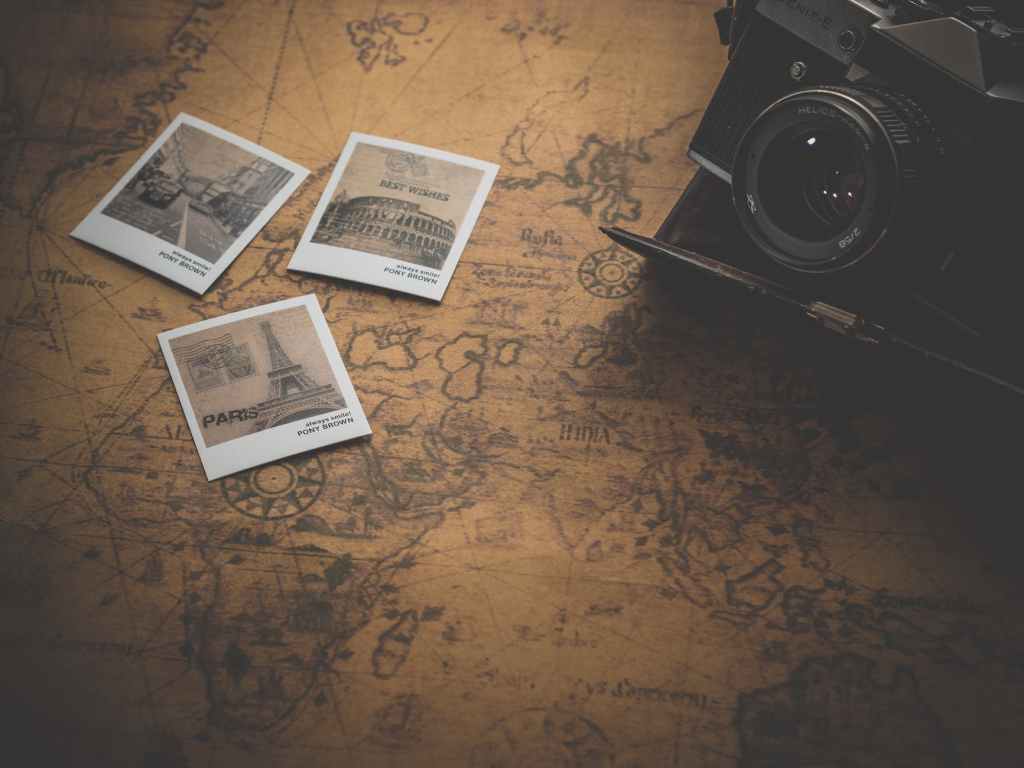
It’s a big, wide world out there. I haven’t seen all of it, yet. I still look at pictures from places I haven’t been, like the Grand Canyon or Yellowstone, and I marvel at wonders I know exist in the world outside my own home. One day I plan to see the Eifel Tower, the Louvre, and the Grand Canal of Venice. I look at what I see now, though, and ask people who lived in the moment what they felt. It doesn’t quite get me there, but I know that they can bring me a little closer. Sometimes a picture isn’t enough. A picture may be a thousand words, but it’s not quite the same as experiencing the real thing. I’ll never forget my time in Baghdad, the patrols I would make through the city markets as I interacted with the children, or the smiles on their young faces when I was able to share some Jolly Ranchers with them; I realized we weren’t so different. Looking back, I never knew the world could be so big, and yet so small.
 Writing in Cadence
Leave a comment